

Universal Safety I/O Changes the Spare-Parts Equation
When a legacy safety system must be maintained or expanded, the difficult question is often not how many channels are needed. It is how many different input and output module types must be identified, stocked and kept compatible with the installed system. Honeywell’s FC-RUSIO-3224 addresses that planning problem with 32 software-configurable universal safe I/O channels in one module family.
*Suitability depends on the complete Safety Manager architecture, system release, approved configuration, field circuit and applicable functional-safety lifecycle.
The Spare-Parts Problem Is Bigger Than One Failed I/O Card
Four signal families can create a crowded store-room strategy
Conventional expansion plans often separate digital input, digital output, analog input and analog output functions into dedicated hardware. That approach is familiar, but it can multiply stock codes, minimum holding quantities and identification work. During a shutdown, an apparently available card may still be the wrong signal type, termination arrangement or revision for the open slot.
Uncertain future signals make early purchasing difficult
Brownfield projects rarely begin with a perfectly stable I/O list. A burner-management modification may add flame-detector status, shutdown pushbuttons and valve solenoids; a refinery expansion may introduce pressure transmitters, trip contacts and analog final elements. If every late signal change requires a different fixed-function card, the project team must revise hardware counts, cabinet allocation and spare-part coverage.
How FC-RUSIO-3224 Creates More Flexible Safety I/O Planning
Thirty-two channels are assigned by engineering configuration
The Honeywell hardware reference identifies FC-RUSIO-3224 as a 32-channel Universal Safety I/O module. Channel functions are configured in Safety Builder rather than fixed only by the front-module type. The documented channel set supports digital input, ESD input, analog input, digital output and analog output functions within stated limits and approved configurations.
Universal does not mean unlimited
A software-configurable channel is not permission to connect any field device without analysis. Engineers must still confirm signal range, line monitoring, field capacitance, loop power, load current and safe-state behavior. The official reference lists 100 nF maximum field capacitance for AI, DI and AO channels and 1 µF for DO channels.
Treat ratings as system data
The module is specified for 24 V DC with a −15% to +30% tolerance and maximum 300 mA supply current without field load. Published external operating temperature is −40°C to +70°C; storage is −40°C to +85°C. Cabinet temperature, field load and installation practice remain engineering inputs.
Redundancy, IOTA and Network Details Still Define Compatibility
Match the IOTA
FC-RUSIO-3224 mounts on an I/O Termination Assembly. Honeywell release documentation associates FC-IOTA-R24 with supported redundant arrangements using two modules, while FC-IOTA-NR24 is used for supported non-redundant arrangements. Confirm the release and full IOTA suffix.
Trace both RUSIO links
The module communicates through an Ethernet-based Universal I/O link using a dedicated protocol. Product literature describes two 100 Mbaud links. Partner module, IOTA, switches, power feeds, controller release and configuration must be reviewed as one path.
Capture diagnostics first
Input scanning, hardware tests, watchdogs, temperature monitoring, status LEDs and 1 ms SOE time stamping support maintenance decisions. Record diagnostic codes and Safety Builder status before replacing hardware.
Where Universal Safety I/O Can Reduce Lifecycle Pressure
Refineries & petrochemical units
Shutdown valves, pressure trips, furnace interlocks, gas detection and package interfaces can combine discrete and analog safety signals. Universal channels can help reserve capacity without assigning every future signal to another fixed-function spare.
Generation & burner management
Boiler trips, flame supervision, fuel shutoff valves, turbine auxiliaries and balance-of-plant protection create mixed I/O requirements. Supported functions can share a hardware platform after each field circuit and safety function is verified.
LNG & distributed process areas
Remote I/O can reduce long home-run cabling in distributed installations. Cable routing, hazardous-area interfaces, barriers, grounding and environmental protection still require project-specific design.
Choose the Situation That Matches Your Project
Select a project path to see which evidence will help Frida and the technical team review the request more efficiently.
01I need an exact replacement
Send clear photographs of the FC-RUSIO-3224 front label and installed IOTA, the Safety Manager release, module position and current diagnostics. State whether the channel configuration must be retained unchanged.
02I am planning an expansion
Provide the proposed DI, DO, AI, AO and ESD channel schedule, redundancy requirement, field-device signal types, cabinet location and target commissioning date. This helps distinguish module quantity from complete assembly requirements.
03I am investigating a suspected fault
Record LED states, Safety Builder messages, partner-module status, RUSIO link condition, supply voltage and several affected channel readings before removal. These details help separate hardware failure from wiring, load, network or configuration issues.
Questions Safety Manager Users Commonly Ask
Can one FC-RUSIO-3224 replace separate DI, DO, AI and AO cards?
Not as an automatic drop-in replacement. The module can be configured for supported digital and analog functions, but the installed IOTA, system release, field circuit, application logic and safety validation must support the proposed design.
Does every channel support every function at the same time?
No. There are 32 universal channels, but function-specific limits apply. Honeywell lists up to 32 DI, 32 AI or 32 DO channels, while analog output is limited to 16. Total output loading and field-circuit limits must also be respected.
Is a single FC-RUSIO-3224 a redundant configuration?
No. Supported redundant arrangements use two modules with the appropriate redundant IOTA and system architecture. Confirm the exact release matrix and installed FC-IOTA-R24 assembly before ordering.
Can FC-IOTA-R24 and FC-IOTA-NR24 be treated as equivalent?
No. They serve different supported architecture arrangements. FC-IOTA-R24 is associated with redundant module configurations, while FC-IOTA-NR24 is used in supported non-redundant configurations. Verify the full part number and software release.
What should maintenance record before removing a module?
Capture front and IOTA labels, LED states, diagnostic codes, Safety Builder status, node address, channel map, partner-module status, link condition and power measurements. This evidence helps separate a module fault from wiring, load, network or configuration problems.
What information produces a faster and safer quotation?
Send the full module and IOTA labels, quantity, system version, redundant or non-redundant requirement, channel schedule, cabinet photographs, destination and required delivery date. State whether the request is an exact replacement or an expansion.
Verified Related Honeywell Safety Manager Products
The following recommendations link only to product pages confirmed on SalesPlcAuto. They are related system components, not declared substitutes for FC-RUSIO-3224.
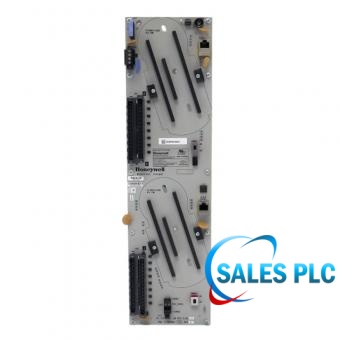 FC-IOTA-R2451306505-175Redundant Universal I/O Termination Assembly
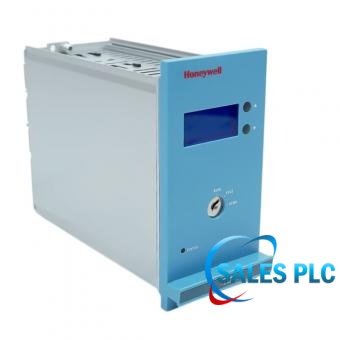 FC-QPP-0002V1.2Safety Manager Quad Processor Pack
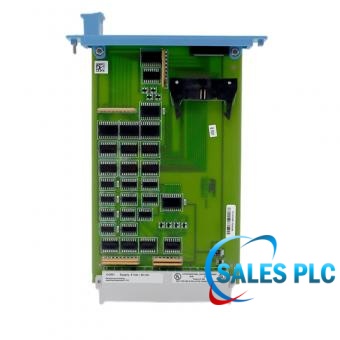 FC-IO-0001IO-0001Safety Manager I/O Bus Module
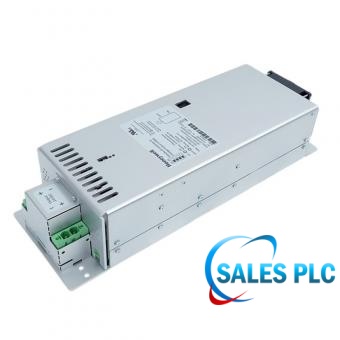 FC-PSU-UNI2450FC-PSU-UNI2450U24 V DC Safety Power Supply
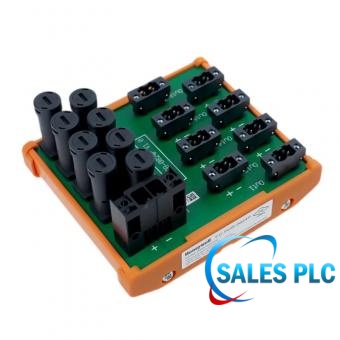 FC-PDB-08248-channel, 24 V DCPower Distribution Board
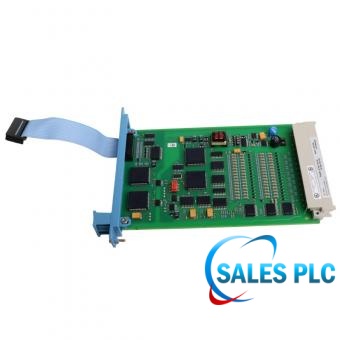 FC-SAI-1620MV1.516-Channel Fail-Safe Analog Input Module
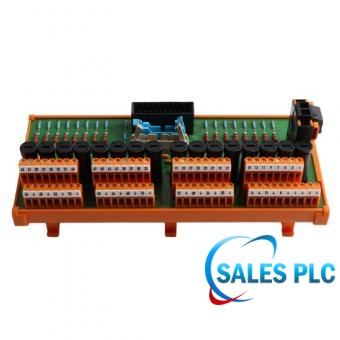 FC-TSGASH-162416-channel HARTGas and Flame Detector Input FTA
Technical Sources and Verification Note
Primary references: Honeywell, Safety Manager Hardware Reference; and Honeywell, Safety Manager product overview. The installed nameplate, current Honeywell release documentation and approved project records remain the final basis for replacement or expansion decisions.
Request an FC-RUSIO-3224 Quotation
Complete the fields below for a more accurate identification and availability review. Frida supports end users, distributors, contractors and system integrators with hard-to-find industrial automation spare parts.



 Network Supported



 32D Guomao Building, No.388, Hubin South Road, Siming District
 +86 18150117685
 sales1@amikon.cn