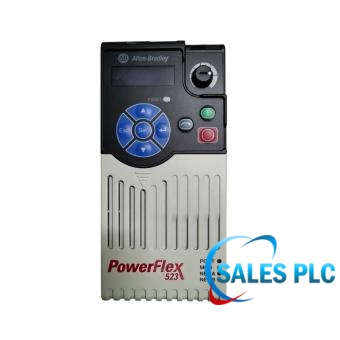
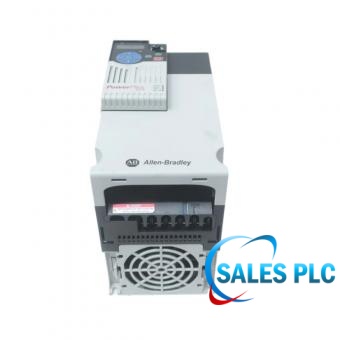
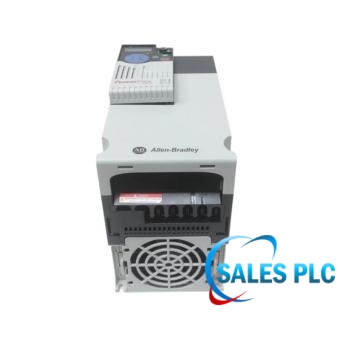
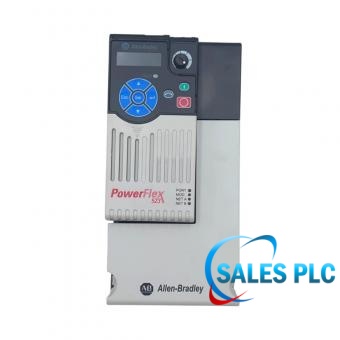
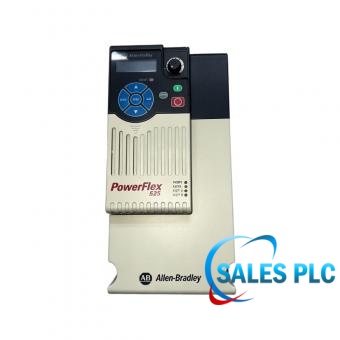
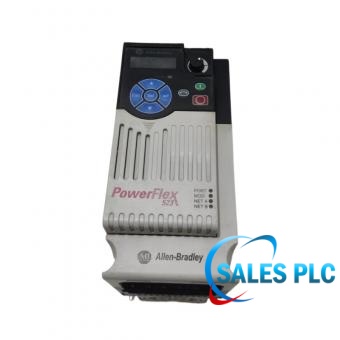
The ABB BRC300, identified by the full model number P-HC-BRC-30000000, is a Harmony Bridge Controller used within ABB process control architecture. Installed as a rack-mounted controller, it provides the processing and communication functions needed to connect control strategies with process I/O, other controllers, operator stations and higher-level system nodes.
The supplied ABB Harmony documentation covers the BRC-100 and PBA-100 generation rather than the BRC300 specifically. It nevertheless provides a clear description of the role performed by a Harmony Bridge Controller and the surrounding modules that form the controller architecture.
BRC300-specific processor, memory, power and firmware specifications should be checked against the correct BRC300 manual before engineering or replacement work.
The BRC300 is identified on the supplied product as a Harmony Bridge Controller. In the Harmony architecture, the bridge controller works as the main processing unit between the process I/O layer and the rest of the control system.
According to the Harmony Bridge Controller documentation, a BRC controller performs several central tasks:
In practical terms, the bridge controller converts field information into control actions. Measurements and status signals enter through the I/O system, the configured control strategy processes this data, and output instructions are returned to the relevant process devices.
The BRC300 bridges field information and configured control actions across the Harmony architecture.
The Harmony architecture provides two main paths for connecting process I/O to a BRC controller.
Harmony I/O blocks communicate with the controller through Hnet. ABB defines Hnet as the communication path between a Harmony controller and Harmony I/O blocks.
A Processor Bus Adapter is used to provide the physical connection between the BRC controller and the Hnet subsystem. The adapter also supports Hnet termination, isolation functions and the controller redundancy link.
Examples of processor-based Harmony I/O blocks referenced in the manual include:
Each I/O block consists of an I/O module and its associated base.
Harmony rack I/O modules communicate with the controller through the I/O expander bus. This is a parallel communication bus between a Harmony rack controller and the rack-mounted I/O modules.
The documentation states that Hnet and I/O expander bus communication can operate at the same time. This allows one controller configuration to use both distributed Harmony I/O blocks and conventional Harmony rack I/O modules.
Within a Harmony control unit, BRC controllers and other intelligent modules exchange information through Controlway.
Controlway is described as a high-speed, redundant, peer-to-peer communication link. Its two independent channels provide separate communication paths through the module mounting unit backplane.
The controller can also exchange data with other parts of the control system through Cnet and with supported legacy INFI-NET, INFI 90 OPEN and Plant Loop system components.
Redundancy is an important part of the Harmony Bridge Controller architecture.
In a redundant arrangement, one BRC module operates as the primary controller while the second remains in standby. The backup controller receives updated control information from the primary so that it is ready to assume control if the primary controller goes offline.
The documentation describes two methods of implementing the redundancy connection:
The primary and backup controllers must use matching firmware revisions. Different firmware revisions may cause incorrect operation following a controller switchover.
Redundancy is particularly relevant where a controller failure could interrupt production, create an unsafe operating condition or cause significant economic loss. The complete redundancy arrangement must include compatible controllers, adapters, cabling, firmware and configuration.
Send the complete model, firmware revision and installed Harmony configuration for an accurate response.
The referenced Harmony documentation defines applications by control function rather than by individual industry. Based on those functions, a Harmony Bridge Controller is intended for process-control systems requiring one or more of the following capabilities.
The controller can execute multiple analog control loops using measurements received from process I/O. These loops may coordinate transmitters, final control elements and other field devices through the configured control strategy.
BRC controllers can be applied where equipment and process steps must follow a defined operating sequence. The controller evaluates input conditions and executes the configured sequence through the connected I/O system.
The documentation identifies batch control as one of the supported application types. The controller can execute configured batch-related control logic as part of a Symphony or compatible INFI 90 OPEN system.
The BRC architecture supports supervisory control applications that coordinate information from several parts of the process. The controller can import and export information to other control modules and system nodes while responding to operator commands.
The controller’s processing and communication functions allow it to be used for optimization routines in which several process values and control outputs must be evaluated together.
The controller can support applications that monitor process performance and use the collected data within the configured control strategy.
ABB also identifies process modeling as a hardware application for the Harmony Bridge Controller. These applications can be data-intensive, program-intensive or both.
A BRC controller is particularly relevant where an installation contains both:
The two communication paths can operate simultaneously when correctly configured.
Without assigning the controller to industries not named in the supplied manual, its documented control functions support the following application areas:
| Application area | Role of the Harmony Bridge Controller |
|---|---|
| Continuous process control | Executes multiple analog control loops using process input and output data |
| Sequential equipment control | Coordinates equipment according to configured operating sequences |
| Batch process control | Runs batch-related control strategies and associated process steps |
| Supervisory control | Exchanges data with other controllers, operator interfaces and system nodes |
| Process optimization | Processes plant information for configured optimization routines |
| Performance monitoring | Supports assessment of process and control performance |
| Process modeling | Executes data-intensive or program-intensive modeling functions |
| Redundant process control | Supports primary and standby controller configurations |
| Distributed Harmony I/O | Communicates with Harmony I/O blocks over Hnet |
| Rack-based Harmony I/O | Communicates with rack I/O modules over the I/O expander bus |
| Legacy system integration | Supports architecture compatible with applicable INFI 90 OPEN and earlier system components |
Actual suitability depends on the installed firmware, control configuration, I/O arrangement and compatibility of the surrounding system hardware.
The following models and nomenclatures are identified in the supplied Harmony Bridge Controller documentation.
| Model or nomenclature | Product type | Relationship to the BRC system |
|---|---|---|
| BRC-100 / P-HC-BRC-10000000 | Harmony Bridge Controller | Controller model specifically documented in the supplied manual |
| BRC300 / P-HC-BRC-30000000 | Harmony Bridge Controller | Product shown in the supplied photographs; BRC300-specific parameters require its own manual |
| P-HC-BRC-PBA10000 | Processor Bus Adapter | Supports Hnet communication, controller redundancy and termination-unit connections |
| P-MK-HRM-BRC1000A | BRC Redundancy Kit | Connects redundant BRC modules when Hnet and termination-unit communication are not needed |
| IEMMU11 | Module Mounting Unit | Provides mechanical mounting, power and backplane communication for rack modules |
| IEMMU12 | Module Mounting Unit | Module mounting unit referenced for the Harmony rack architecture |
| IEMMU21 | Module Mounting Unit | Module mounting unit for compatible Harmony rack modules |
| IEMMU22 | Module Mounting Unit | Module mounting unit referenced in the BRC documentation |
| NTMP01 | Multifunction Processor Termination Unit | Provides field termination for auxiliary serial ports and local station connections |
| IISAC01 | Analog Control Station | Operator control station supported through the BRC station link |
| CIO-100 | Harmony Control I/O Block | Provides an Hnet path for control-station communication |
| CIO-110 | Harmony Control I/O Block | Control I/O block used for station communication through Hnet |
| AIN-120 | Harmony Analog Input Block | Processor-based analog input device connected through Harmony I/O |
| AOT-150 | Harmony Analog Output Block | Processor-based analog output device connected through Harmony I/O |
| DIO-400 | Harmony Digital I/O Block | Processor-based digital I/O device connected through Harmony I/O |
| IMCIS12 | Control I/O Module | Supports control-station or bypass-station arrangements on the I/O expander bus |
| IMQRS12 | Control I/O Module | Used in applicable rack I/O station arrangements |
| IMDSO14 | Digital Output Module | Harmony rack digital output module referenced by the controller documentation |
| NKTU01 | Termination Unit Cable | PVC cable connecting the NTMP01 termination unit |
| NKTU11 | Termination Unit Cable | Non-PVC version of the termination-unit cable |
| NKSE01 | Serial Extension Cable | PVC serial extension cable |
| NKSE11 | Serial Extension Cable | Non-PVC serial extension cable |
| P-HA-MSC-TER10000 | Hnet Terminator | Provides termination for the Hnet communication path |
When replacing a BRC controller, matching the name “Harmony Bridge Controller” is not sufficient. The complete model, firmware and system configuration must be checked.
Before installing a BRC300 P-HC-BRC-30000000, verify:
For a redundant pair, the primary and backup controller firmware revisions must match. Switch and jumper settings on a replacement module should also be checked against the removed controller and the correct installation manual.
The ABB BRC300 P-HC-BRC-30000000 serves as a Harmony Bridge Controller within ABB process-control architecture. Its central purpose is to connect process I/O with configured control strategies, controller communications and operator-level commands.
The Harmony architecture supports distributed I/O blocks through Hnet, rack I/O through the I/O expander bus, controller-to-controller communication through Controlway and primary/backup controller arrangements for improved control availability.
The supplied ABB manual provides a reliable explanation of this system architecture and its supporting components. However, because the document specifically covers the BRC-100 and PBA-100, BRC300-specific processor, memory, electrical and environmental specifications should only be taken from the correct BRC300 technical document.
Technical reference: ABB Harmony Series Bridge Controller and Processor Bus Adapter - BRC-100 and PBA-100, WBPEEUI230017B1
Confirm the full model, firmware, mounting unit, I/O paths and redundancy hardware against the installed system.
Contact: Sandy


Visit us
32D Guomao Building, No.388, Hubin South Road, Siming District
Please read on, stay posted, subscribe, and we welcome you to tell us what you think.
Disclaimer : Salesplcauto sells new and surplus products and develops channels for purchasing such products. This website has not been approved or recognized by any of the listed manufacturers or trademarks. Salesplcauto is not an authorized distributor, dealer, or representative of the products displayed on this website. All product names, trademarks, brands, and logos used on this website are the property of their respective owners. The description, explanation, or sale of products with these names, trademarks, brands, and logos is for identification purposes only and is not intended to indicate any association with or authorization from any rights holder.
Copyright @2026 SalesPlc Limited. Sitemap
/ Blog
/ XML
/ Terms And Conditions
/ Privacy Policy
 Network Supported



About Us
Reliable Industrial Automation Parts, Global Supply Support SALES PLC works with a broad network of qualified suppliers to provide industrial automation components that meet our customers’ requirements for quality, availability, price, and delivery time. Our product portfolio covers PLC, DCS, HMI, control systems, safety systems, drives, communication modules, and other critical spare parts from leading brands, including Siemens, Emerson, Invensys Triconex, HIMA, GE, ABB, Honeywell, and Bently Nevada. More Than Products — Complete Supply Solutions Our strength goes beyond product sourcing. We work closely with end users, system integrators, maintenance teams, and industrial partners to identify suitable replacement parts and practical procurement solutions. Through integrated purchasing and online support, customers can send inquiries and place orders throughout the year. Our experienced team responds quickly and helps reduce downtime caused by unavailable or obsolete equipment. Our Team Our experienced team brings together product specialists, sourcing professionals, sales consultants, and customer service staff. We work together to provide clear communication and dependable support at every stage of the order. Growing Together for More Than 20 Years For more than 20 years, SALES PLC has continued to grow with the support and trust of customers, suppliers, and business partners around the world. Every project, inquiry, and partnership has helped us improve our service. Looking ahead, we remain committed to providing dependable products, responsive communication, and professional industrial automation solutions. Thank you to every customer and partner who has supported our journey. We look forward to building a stronger and more successful future together. Sustainable Partnerships SALES PLC believes in building long-term, mutually beneficial relationships with customers and suppliers. We focus on honest communication, responsible sourcing, continuous improvement, and reliable service. As industrial technology continues to evolve, we keep expanding our product knowledge and supplier network to support new systems, legacy equipment, and replacement-part requirements. Contact SALES PLC Our team is available during working hours to answer your questions, check product availability, and prepare a quotation.
Where to Find Us
 32D Guomao Building, No.388, Hubin South Road, Siming District
 +86 18150117685
 sales1@amikon.cn
Follow Us